our projects
MAP-GLIOMA
Imaging Mass Cytometry to spAtially resolve the tumour microenvironment of Pediatric-type diffuse high-grade Gliomas
About the MAP-GLIOMA project
Project MAP-GLIOMA utilises spatial biology to examine tumour samples in their natural state, preserving important characteristics often lost during traditional analysis methods.
In particular, Imaging Mass Cytometry (IMC) is an advanced technology that allows researchers to visualise how individual cells within a tumour interact with their environment and to study the expression of multiple proteins in brain tumour samples at the single-cell level.
The project focuses on pediatric-type diffuse high-grade gliomas, which are aggressive brain tumours. The goal is to develop specific protocols and expand current antibody panels to investigate the heterogeneous cell types within these tumours and their surrounding environments. By employing IMC, the team will create a detailed map of the tumour's cellular composition, marker expression, and cellular interaction networks. This work aims to enhance diagnostic and treatment options for children affected by these devastating tumours.

About Ospedale Pediatrico Bambino Gesù
Ospedale Pediatrico Bambino Gesù is a tertiary care academic children's hospital located in Rome that is under extraterritorial jurisdiction of the Holy See. As a tertiary children referral centre, the hospital provides over 20 specialties of healthcare through 10 pediatric departments.
MD Anderson Cancer Center is developing first‑of‑its‑kind RNA‑targeting therapies for glioblastoma (GBM). By focusing on the powerful role of non‑coding RNAs, MD Anderson researchers are exploring a new therapeutic strategy that shows remarkable promise in patient‑derived tumor models and could pave the way for a new class of GBM treatments.
Supported by a $50,000 Glioblastoma Research Organization grant, Project Kenny pioneers the first fully implantable, rechargeable Tumor Treating Fields (TTF) device aimed at delivering 24/7 therapy without external hardware.
The Brain Tumor Funders' Collaborative (BTFC) announced a request for proposals for two-year, $500,000 research grants for multi-institutional, multi-disciplinary research projects focusing on liquid biopsy for primary brain tumors.
Project Build On, a research initiative underway at The University of Texas MD Anderson Cancer Center, explores strategic ways to target metabolic weaknesses of glioblastoma. Through innovative drug combinations, researchers aim to block key pathways that fuel cancer growth, offering new hope for patients with this aggressive disease.
Marking the GBMRO'S first funded research project of 2025, Project Rocket, formally known as Characterizing Glioblastoma Progression, Pseudoprogression, and Radiation Necrosis with Bedside Ultrasound Using Sonolucent Cranial Implants, led by Dr. Randy S. D’Amico, aims to identify key ultrasound markers that reveal whether the tumor is growing, healing, or experiencing other changes.
The Glioblastoma Biobank Project, formally known as Key LARGO (Key Longitudinal Associations with Risk and Glioblastoma Outcomes), is now live and open for enrollment!
The Glioblastoma Research Organization (GBMRO) announces its largest donation to date, $80,000, to fund Project DeLaRosa in partnership with Children's National Hospital.
Project Every Day Counts was launched with a $50,000 donation in collaboration with Gray for Glioblastoma Society to Children’s Hospital Los Angeles. The project honors Josh Wexler and the Wexler Family and their dedication to furthering GBM research.
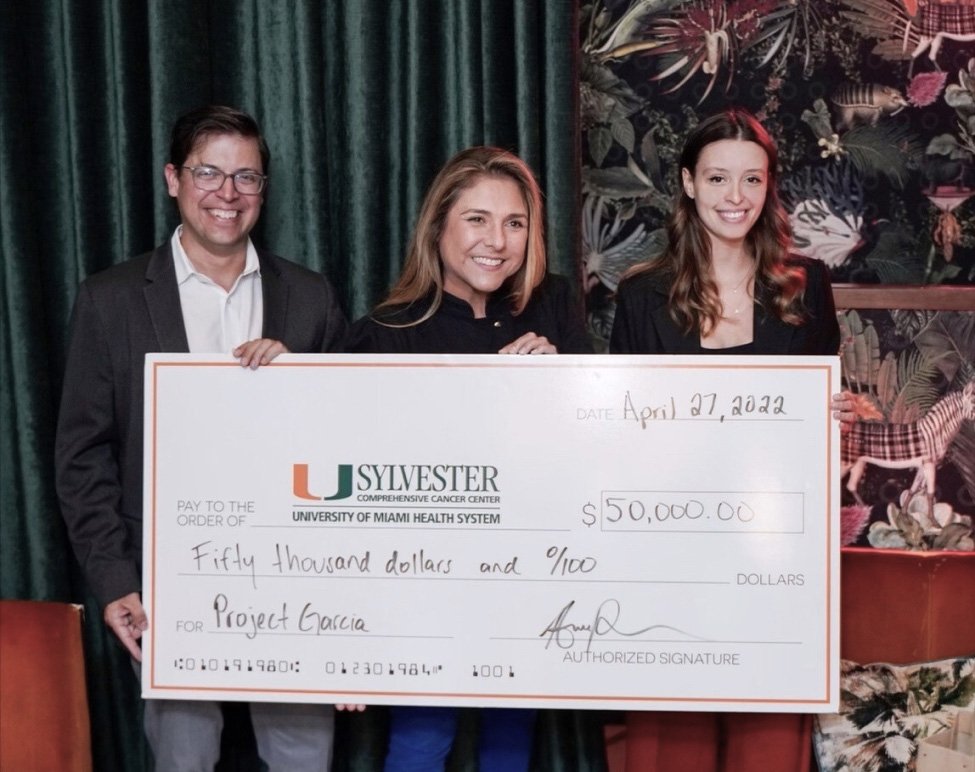
Project Garcia marks GBMRO’s fourth fully funded Glioblastoma research project and the first in collaboration with Sylvester Comprehensive Cancer Center in Miami, Florida. The project includes novel research that uniquely applies a multiparametric intraoperative strategy to guide tumor resection and identify infiltrating tumor cells responsible for tumor recurrence.
The median age for diagnosis of Glioblastoma is 65, with patient prognosis known to decline with increased age. Christopher Hine, Ph.D., a researcher in the Department of Cardiovascular and Metabolic Sciences at Cleveland Clinic's Lerner Research Institute, has a theory that could explain why.
The Glioblastoma Research Organization's Project Rush is in collaboration with Lenox Hill Hospital’s Department of Neurosurgery’s Brain Tumor Center in New York City. Project Rush was inspired by the passing of Neil Peart a Canadian-American musician, best known as the drummer and lyricist of the rock band, Rush.
Funded by the Glioblastoma Research Organization, the laboratory of Dr. Steven Millward at the University of Texas MD Anderson Cancer Center has launched The Lee Project, which focuses on the directed evolution of vectors for treating GBM.
Brain tumors are the leading cause of cancer-related death in children. Of all the pediatric brain tumors, high-grade gliomas (HGG) remain the greatest challenge, with few treatment options available and a five-year survival rate of only 10-30 percent. A potential alternative to conventional treatments is to utilize a patient’s own immune system to attack tumor cells—immunotherapy.